
| Category | Exercises | Primary Benefit |
|---|---|---|
| Upper Body | Neck Stretches, Shoulder Rolls, Wrist & Finger Stretches, Tricep Dips | Relieves tension from typing and improves posture |
| Lower Body & Core | Seated Leg Lifts, Calf Raises, Chair Squats, Core Twists | Strengthens muscles and prevents stiffness from sitting |
| Full Body & Standing | Desk Push-ups, Hip Flexors, March in Place, Jog-in-chair | Boosts circulation, heart rate, and energy levels |
| Pain Relief Stretches | Back Extensions, Neck Tilts, Spinal Rotations | Reduces chronic back/neck pain and increases flexibility |
| Quick Routine | 5-Minute Desk Workout Plan | Activates all major muscle groups in a short break |
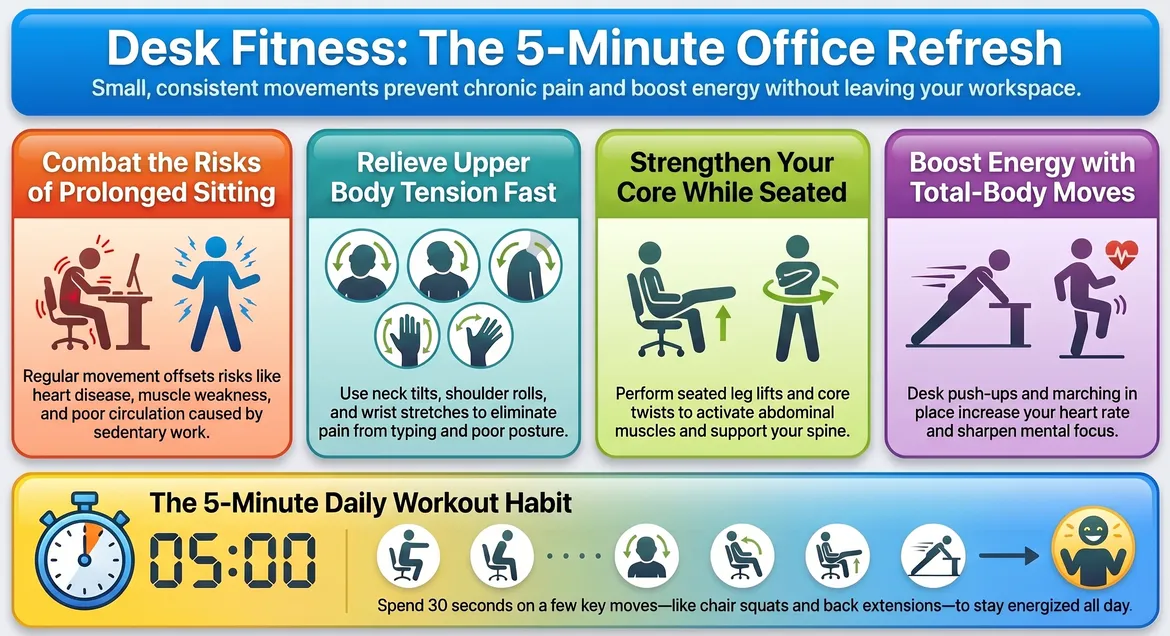
If you have a desk job, you can do simple and effective exercises throughout the day without leaving your desk that will help improve posture, reduce neck and back pain, increase circulation, and strengthen muscles. Neck and shoulder stretches, squats, and leg raises are all exercises that can be done while sitting at your desk and in your office, and they only take a few minutes of your time.
What are the best office exercises at the desk?
The best office exercises at the desk include simple stretches like neck tilts, Wrist & finger stretches, and shoulder rolls, as well as core exercises like seated leg lifts and chair squats. These exercises help improve posture, reduce muscle tension, and boost circulation, all while you remain seated at your desk.
In this article, you will learn about a variety of exercises, from simple stretching exercises like neck stretches to strengthening exercises like seated leg lifts and calf raises, all of which can significantly help your health. Doing these exercises for a few minutes a day won’t take up much of your time, but they can be effective for your physical health.
Why Desk Exercises Matter?
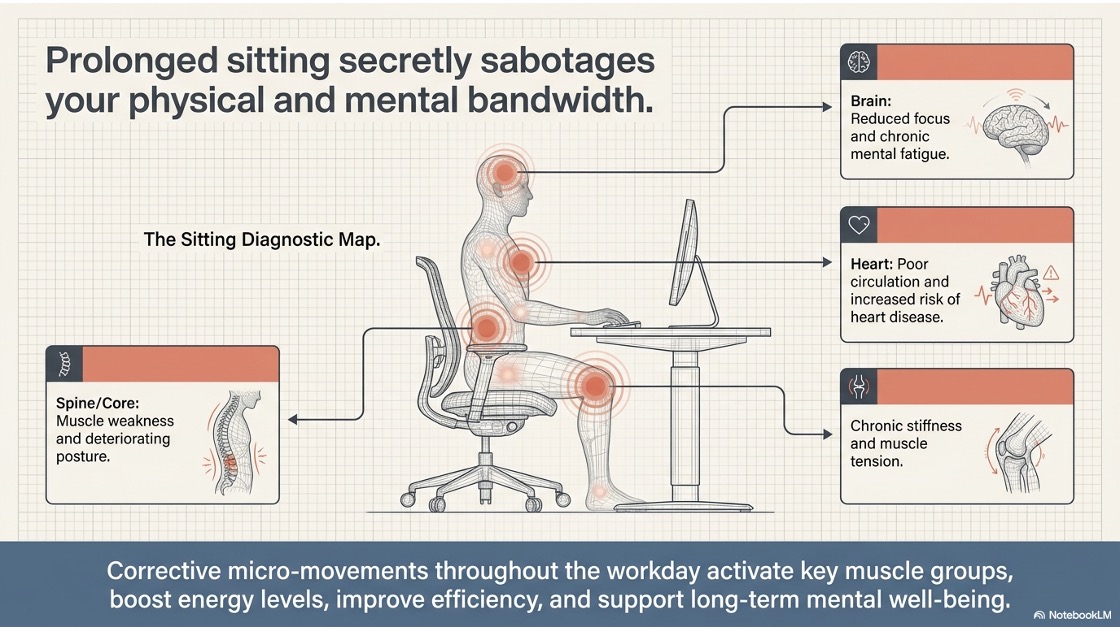
Research has shown that sitting for long periods can lead to poor circulation, muscle weakness, and even an increased risk of heart disease. For this reason, doing simple exercises like desk exercises at work and office chair exercises can not only improve your physical condition, but can also help reduce the pain caused by constant sitting. In fact, some core exercises while sitting at a desk can help strengthen your core muscles and improve your posture.
Performing corrective movements throughout the workday can boost energy levels, improve efficiency, and improve focus. Even light stretches or seated movements can activate key muscle groups and prevent stiffness. In the long run, these small habits help improve physical health, reduce fatigue, and support mental well-being in a desk-bound environment.
Section 1: Upper Body Exercises at the Desk
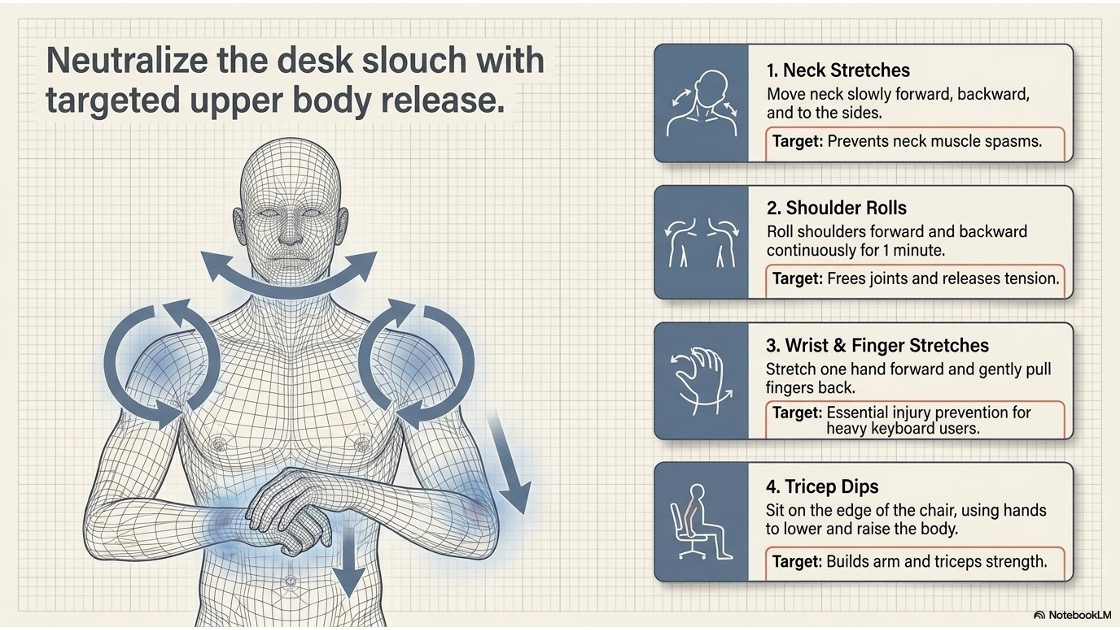
To improve posture and reduce pain from prolonged sitting, simple upper-body exercises are very useful. Here are some important exercises:
1-Neck stretches:
This exercise helps reduce neck tension and prevent neck pain. To perform this movement, you need to slowly move your neck forward, backward, and to the sides to relax the neck muscles. This movement prevents neck muscle spasms and the pain caused by them.
2-Shoulder rolls:
This simple exercise is very useful for releasing tension in the shoulder area. Roll your shoulders forward and backward to strengthen the shoulder muscles and joints. Do this for a minute to feel its effect on muscle freedom.
3-Wrist & finger stretches:
These exercises are especially necessary for those who work a lot with the keyboard. You can prevent wrist and finger pain by gently stretching your wrist and fingers. By stretching one hand forward and pulling your fingers back with the other hand until you feel a stretch in your wrist and hand muscles. Hold for a few seconds and repeat for the other hand.
4-Tricep dips:
This exercise helps strengthen the triceps muscles. To do this exercise, sit on the edge of a chair and use your hands to lower your body. These simple exercises not only reduce muscle pain but also help improve posture and circulation.
Section 2: Lower Body and Core Exercises at Your Desk
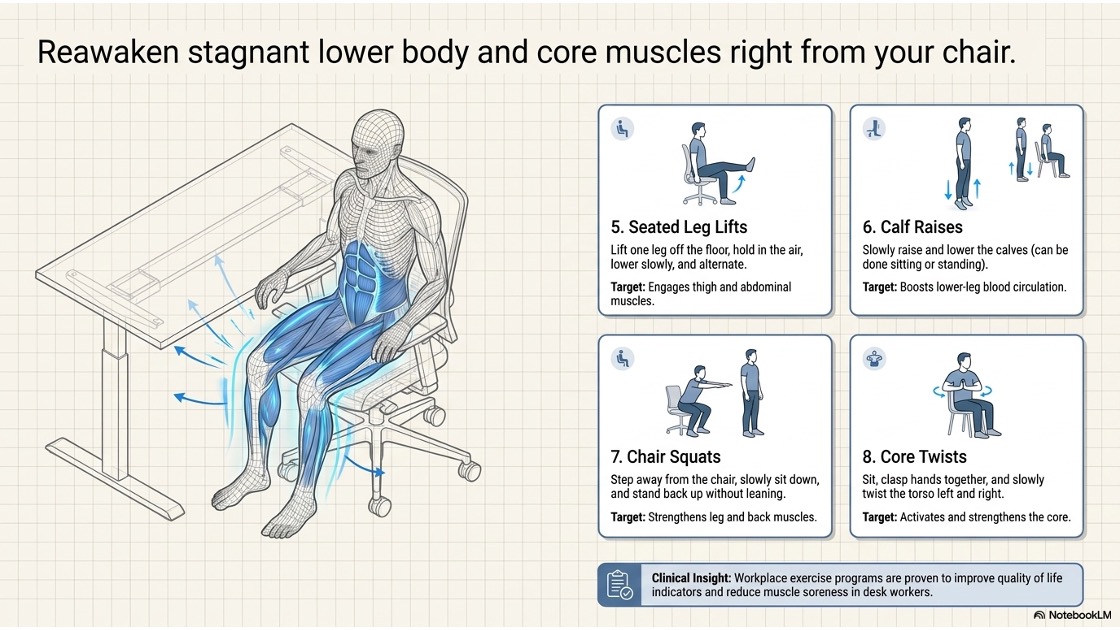
To strengthen your lower body and core muscles, doing simple exercises throughout the day can help improve your strength and flexibility. Here are some effective exercises for your lower body and core:
5-Seated leg lifts:
This exercise helps strengthen your thigh and abdominal muscles. Simply lift one leg off the floor and hold it in the air for a few seconds, then slowly lower it, and repeat for the other leg.
6-Calf raises:
You can do this exercise both sitting and standing. To do it, slowly raise your calf and then lower it. This exercise helps strengthen your calf muscles and improve circulation.
7-Chair squats:
This exercise is very useful for strengthening your leg and back muscles. To do it, step away from your chair, then slowly sit down and stand up again, without leaning on the chair.
8-Core twists:
This exercise helps strengthen your abdominal and back muscles. While sitting, clasp your hands together and slowly twist your body left and right to strengthen your core muscles. These exercises will help you prevent muscle stiffness and fatigue in your lower body and abdomen and keep you energized throughout the day.
“The article The Office Work and Stretch Training explains that workplace exercise programs can improve quality of life indicators and reduce muscle soreness in desk workers.”
Section 3: Total Body Workouts and Standing Desk Options
To strengthen your entire body and keep your muscles active throughout the day, you can use standing and total body workouts.
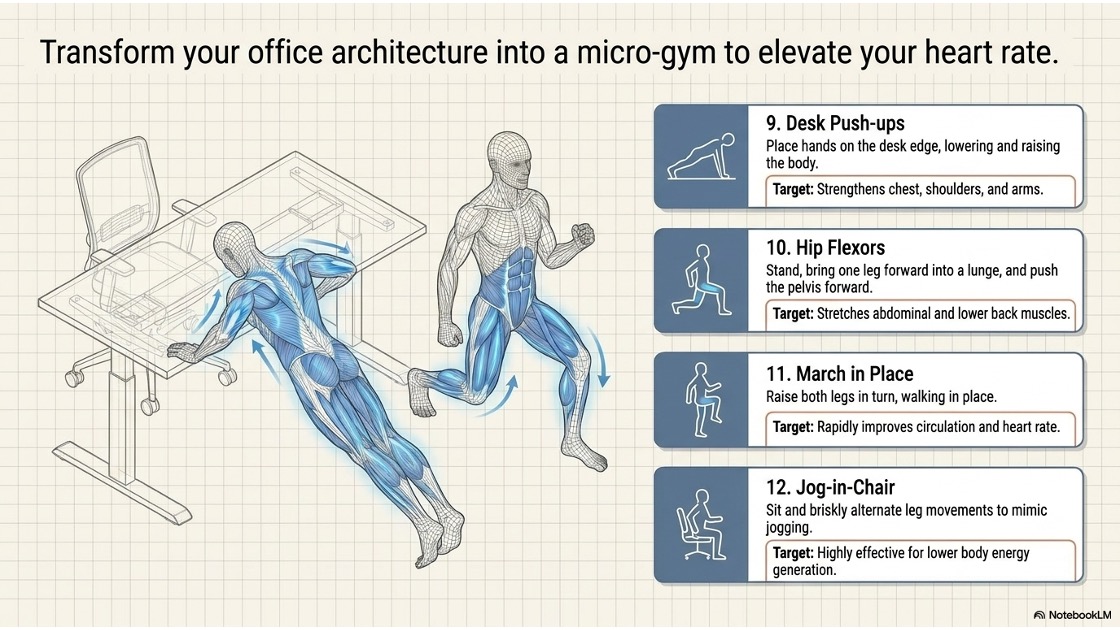
9-Desk push-ups:
To do this exercise, place your hands on the edge of a desk and bring your body towards the desk and then back down. This exercise strengthens the muscles of the chest, shoulders, and arms.
10-Hip flexors:
This exercise is useful for strengthening the abdominal and lower back muscles. While standing, bring one leg forward and slowly move your pelvis forward until you feel a stretch in the thigh and hip muscles.
11-March in place:
This exercise simply involves raising both legs in turn and walking in place. This movement can help improve blood circulation and increase your heart rate.
12-Jog-in-chair:
In this exercise, while sitting in a chair, move your legs briskly and alternately to resemble jogging in place. This exercise is very effective for strengthening the lower body muscles and increasing energy.
Section 4: Stretches to Relieve Pain
To reduce muscle pain and tension caused by prolonged sitting, simple stretches can be very useful. These exercises help to release muscles, reduce pain in various areas of the body, and improve flexibility.
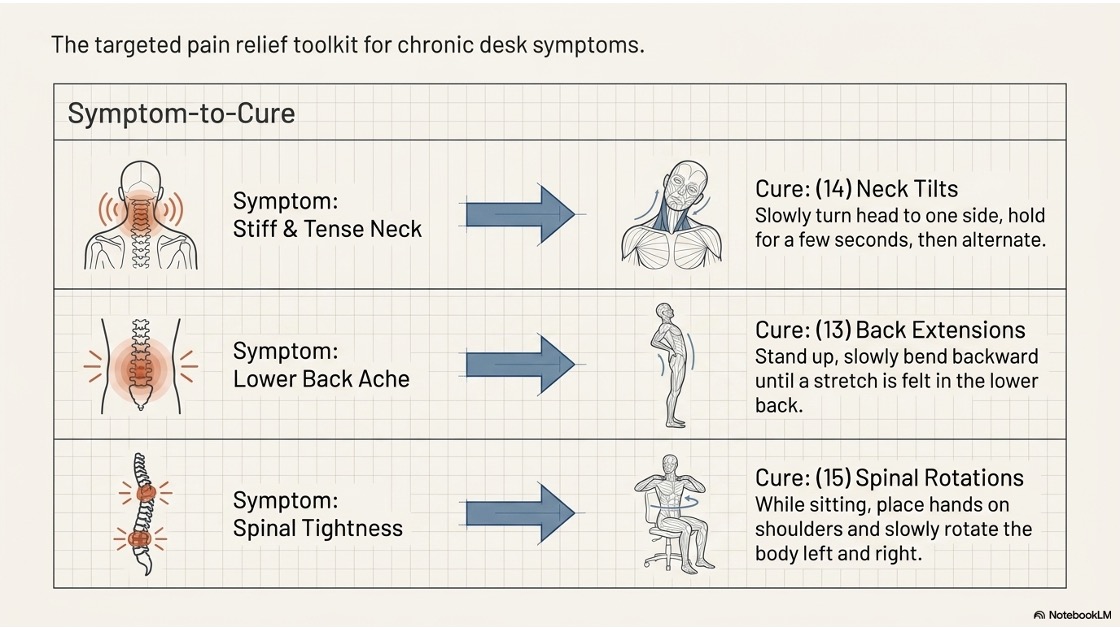
13-Back extensions:
This exercise helps to strengthen the back muscles and reduce pain in this area. To do it, stand and slowly bend your back backwards until you feel a stretch in your lower back. Repeat this several times.
14-Neck tilts:
This exercise is useful for reducing tension in the neck area. Slowly turn your head to one side and hold for a few seconds, then turn it to the other side. Repeat this movement for both sides.
15-Spinal rotations:
This stretch helps to increase the flexibility of the spine and reduces pain in the back and neck. While sitting, place your hands on your shoulders and slowly rotate your body left and right. These stretches can be easily done throughout the day and can help reduce muscle stiffness and chronic pain caused by sitting.
Section 5: 5-Minute Desk Workout
A short and effective workout can keep your body active throughout the day and prevent fatigue from sitting for long periods of time. These desk exercises include stretches and strengthening exercises that can be done in any office environment.
| Exercise | Duration | Instructions |
|---|---|---|
| Neck & Shoulder Stretch | 30 seconds | Tilt your head forward and back, then slowly roll your shoulders to relieve tension. |
| Seated Leg Lifts | 30 seconds | Lift each leg off the floor, hold for a few seconds, then lower. Helps strengthen lower body muscles. |
| Spinal Rotations | 30 seconds | Sit with your hands on your shoulders, rotate your body left and right to stretch your spine and strengthen your core. |
| Desk Push-ups | 30 seconds | Place your hands on the table edge, lower your body towards the table, then push back up. Strengthens chest and arms. |
| Chair Squats | 30 seconds | Stand up from your chair, lower yourself slowly, then rise back up. Strengthens leg muscles and back. |
| Back Extensions | 30 seconds | Stand and bend your back backward to stretch your lower back. Reduces lower back pain. |
| March in Place | 30 seconds | Raise one leg at a time and march in place. Improves circulation and increases heart rate. |
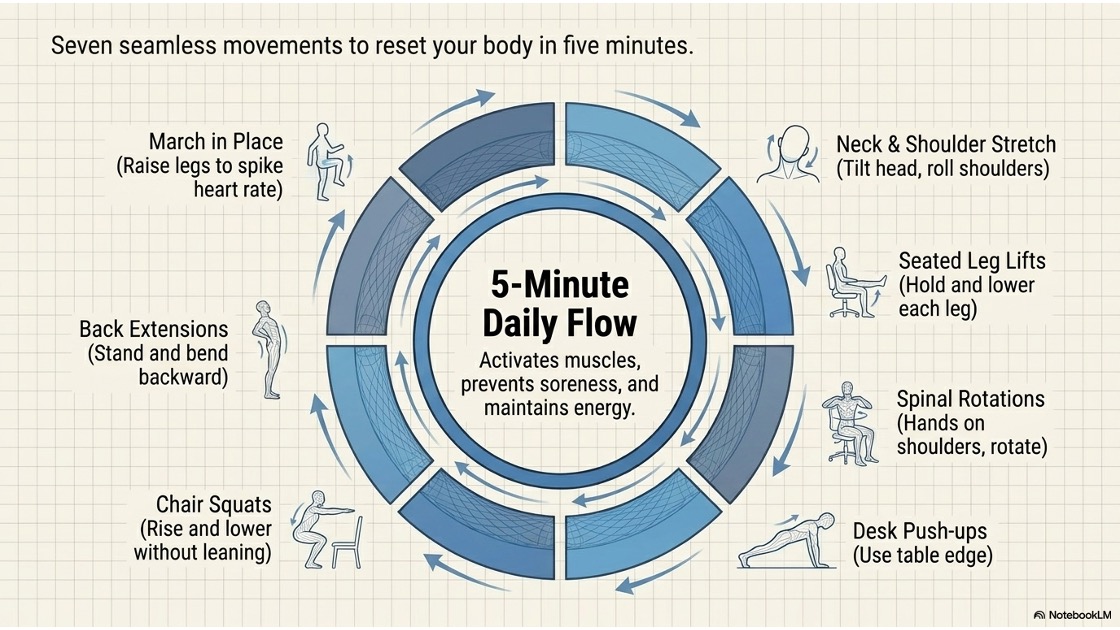
This desk-based workout program helps you activate your muscles, prevent muscle soreness, and maintain energy by doing short and effective exercises throughout the day.
Conclusion
Finally, doing simple desk exercises and stretches can go a long way in reducing muscle pain, improving circulation, and increasing energy throughout the day. These exercises are especially essential for those who spend long hours sitting at a desk.
But in addition to these exercises, having ergonomic office furniture can also play an important role in preventing chronic pain and promoting overall health. Using ergonomic chairs, adjustable desks, and other office furniture that are designed to fit your body will help you improve your posture and prevent musculoskeletal problems. If you are looking for a healthier and more comfortable work environment, now is the time to get ergonomic office furniture for your office. Contact us now to purchase and consult on choosing the best ergonomic office furniture options and optimize your work environment according to your physical needs.